About Balancing Rock of Mawlynnong
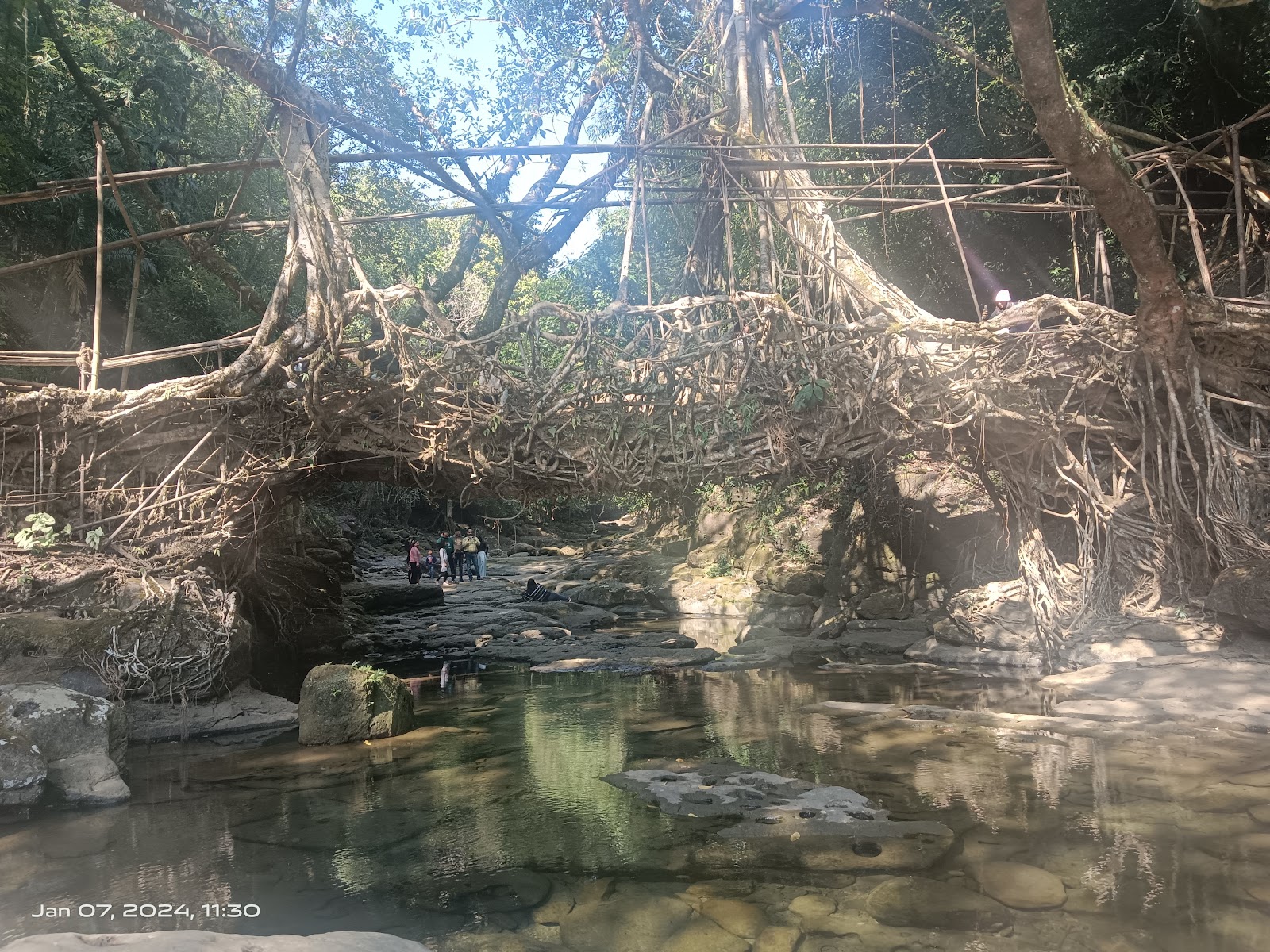
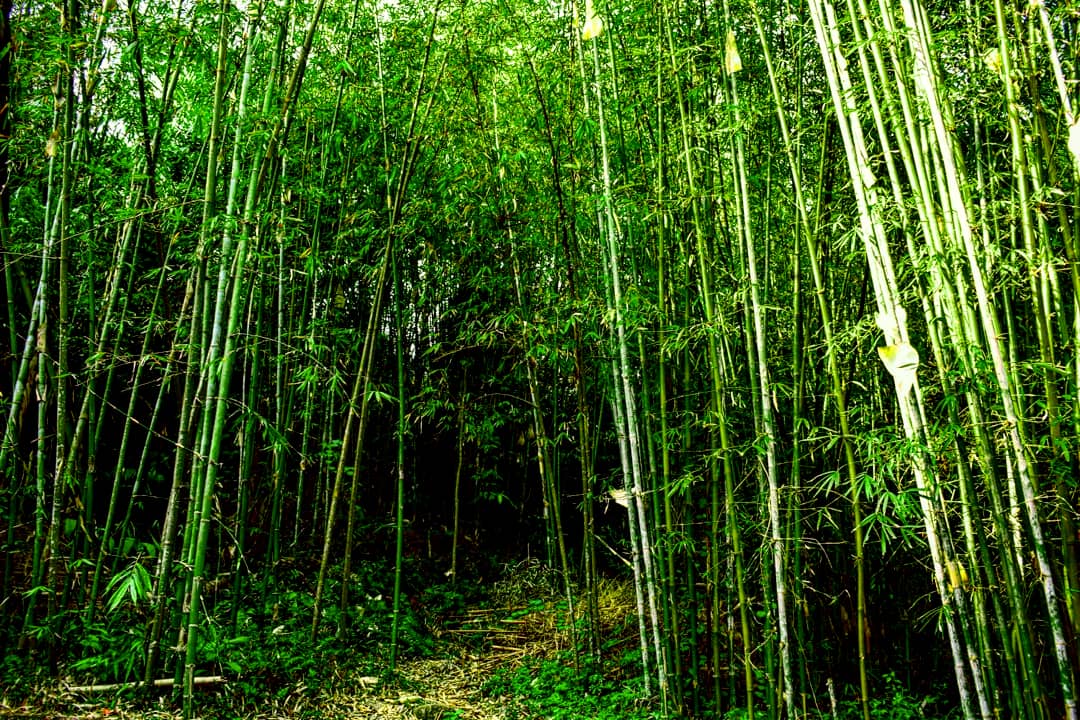
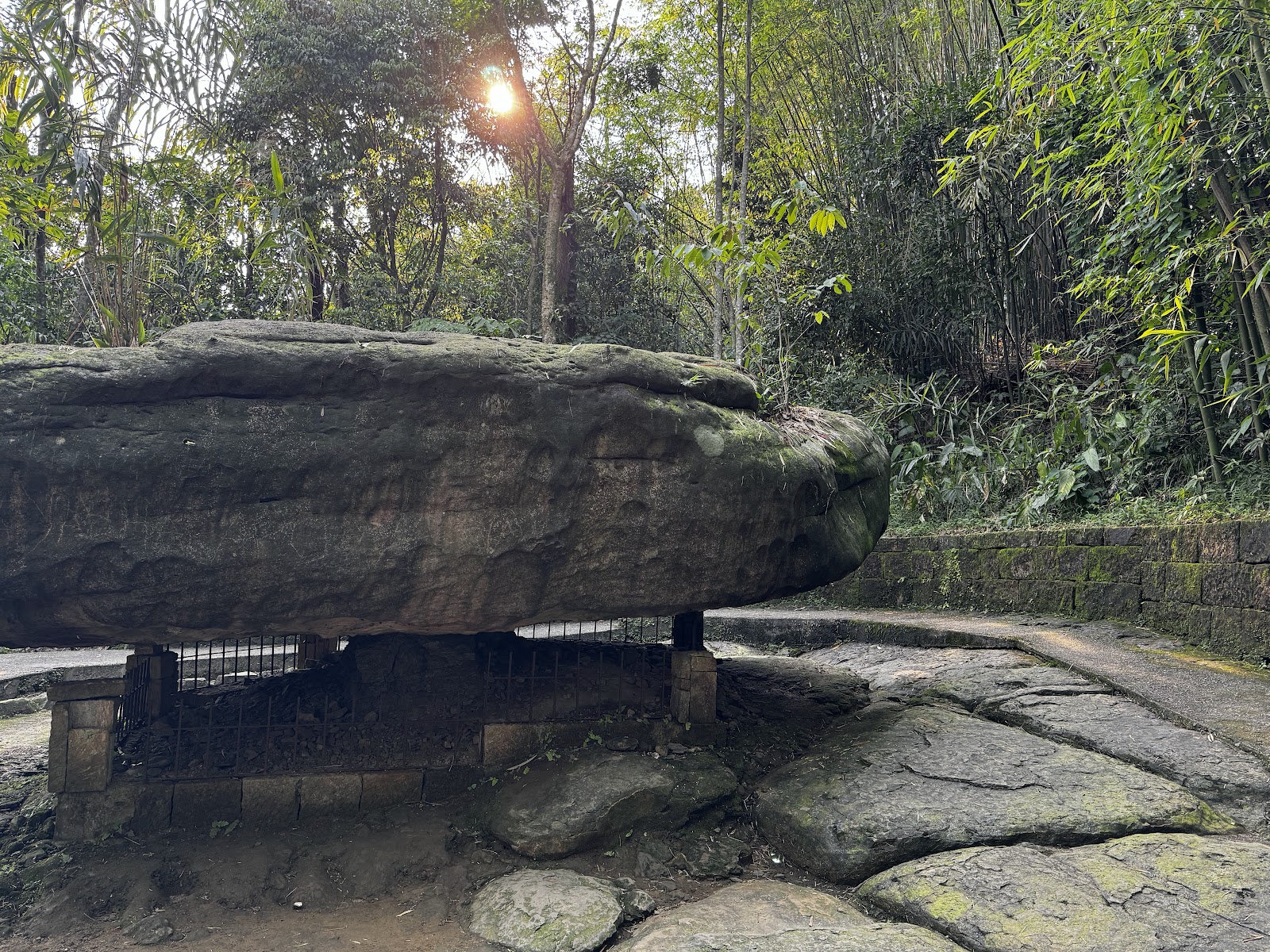
The Balancing Rock, known locally as Maw Ryngkew Sharatia, is a natural rock formation on the edge of Mawlynnong village in East Khasi Hills. A large, rounded boulder sits on a much smaller rock, so from most angles it looks as if it could tip over at any moment. It is the result of natural weathering and erosion, and the site is believed by some locals to have been an old Khasi shrine. For photos, the rock is easy to recognise: a grey, lichen-streaked boulder on a narrow stone pedestal, surrounded by trees, betel nut palms and village greenery. The best shot is a low side angle that shows the gap between the boulder and its base clearly; a slightly wider frame with a person standing beside it (not on it) gives a sense of scale. Overcast light, common here, suits close-up shots of the rock texture. The rock is a short stop usually combined with a walk through Mawlynnong, which is known for its clean, well-kept lanes, the bamboo Sky View tower and the Riwai living root bridge nearby. Visitors are asked not to climb on or disturb the rock.
What to expect at Balancing Rock of Mawlynnong
The rock: A big boulder balanced on a small base, viewable up close from all sides. Walk: A short walk of about 5–10 minutes from the village entry or roughly 1 km from the bus stop area, on level village paths. Photos: Shoot from a low side angle to show the balance point; include a person nearby for scale. Etiquette: Do not climb, push or lean on the rock, and keep litter with you as the village is strict about cleanliness. Nearby: Sky View bamboo platform, village lanes and the Riwai living root bridge.
Visitor Information
Best Time to Visit
October to May
Post-monsoon (October–November) brings green surroundings and clearer skies, a good time for photos. Winter (December–February) is dry and comfortable for walking around the village, though days are short. Spring (March–May) is pleasant before the rains. The monsoon (June–September) is very wet and roads towards Mawlynnong can be slow, but the village is at its greenest. Late morning to early afternoon gives even light for photographs, and leaves time to visit Dawki or the root bridge the same day.
Getting There
Mawlynnong is about 80–90 km from Shillong, a drive of roughly 2.5 to 3 hours via the Shillong–Dawki road, turning off at Pongtung towards the village.
Mawlynnong is about 80–90 km from Shillong, a drive of roughly 2.5 to 3 hours via the Shillong–Dawki road, turning off at Pongtung towards the village. From Dawki it is about 30 km, around an hour by road, so many travellers pair Mawlynnong with Dawki on the same day. From Guwahati it is about 170 km, most of it via Shillong. Vehicles park at the village and the Balancing Rock is a short walk from there. A private cab from Shillong can be booked with Tour Meghalaya for a Mawlynnong–Dawki day trip.
Entry & Duration
Seeing the rock and taking photos takes about 15–30 minutes; allow 2 to 3 hours if you also walk around Mawlynnong and visit the Sky View and root bridge.
Frequently Asked Questions
What does the Balancing Rock of Mawlynnong look like?
It is a large, rounded boulder resting on a much smaller stone base, so it appears to balance on a narrow point. It stands among trees and greenery on the edge of the village.
How far is the Balancing Rock from Shillong?
Mawlynnong is about 80–90 km from Shillong, roughly 2.5 to 3 hours by road. The rock is a short walk from the village parking.
Is there an entry fee for the Balancing Rock in Mawlynnong?
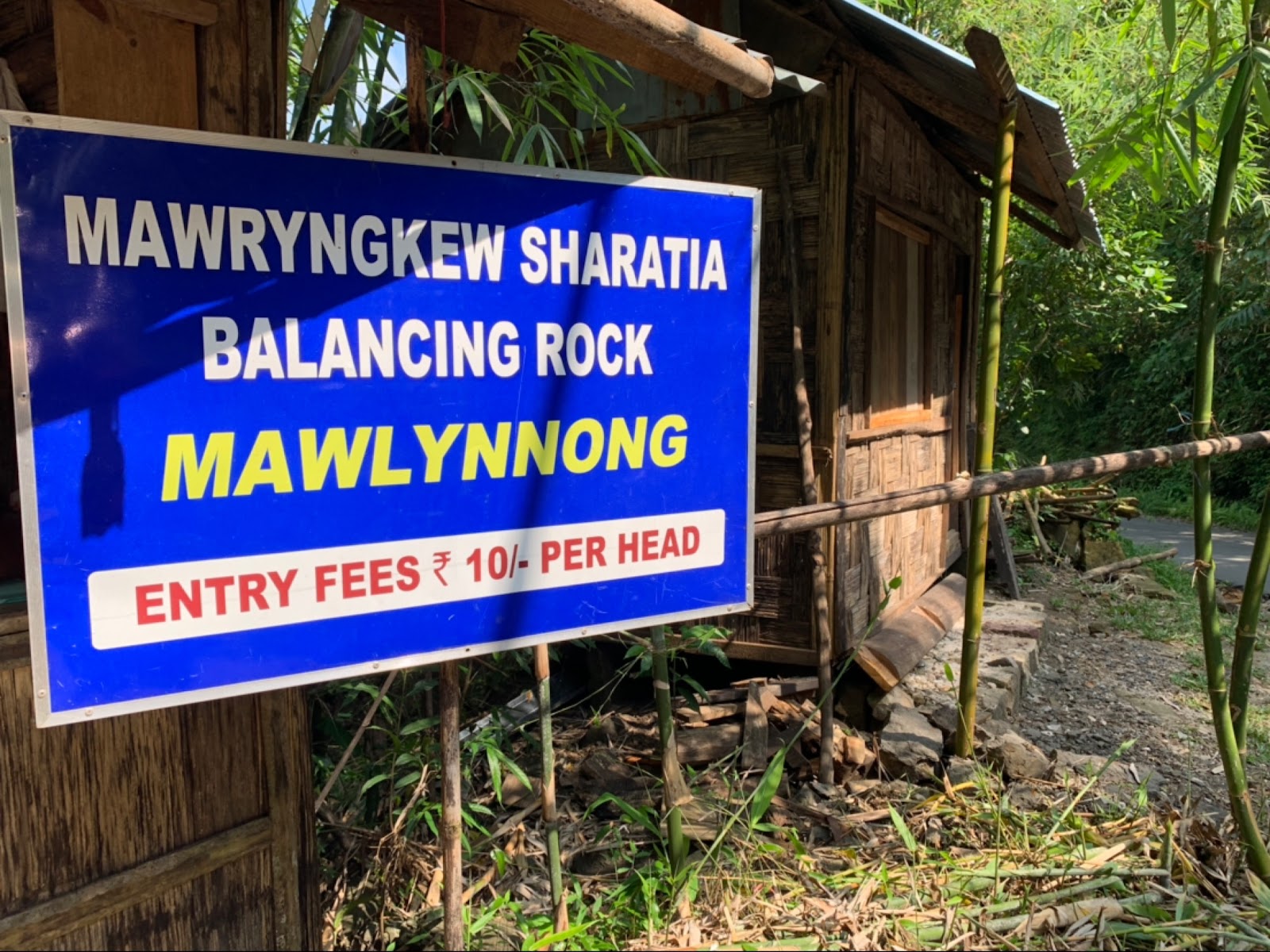
Sources disagree; some list it as free and others report a small charge of about ₹10. Mawlynnong may also collect a village entry or parking fee.
Where are the best photo angles at the Balancing Rock?
A low side angle shows the narrow balance point best, and a wider frame with someone standing beside the rock gives scale. Avoid climbing on it for photos.
Can you visit the Balancing Rock and Dawki in one day?
Yes. Dawki is about 30 km from Mawlynnong, so both are commonly covered on a day trip from Shillong.